AC1200 vs WiFi 6: Which Tenda Router Should You Actually Buy?
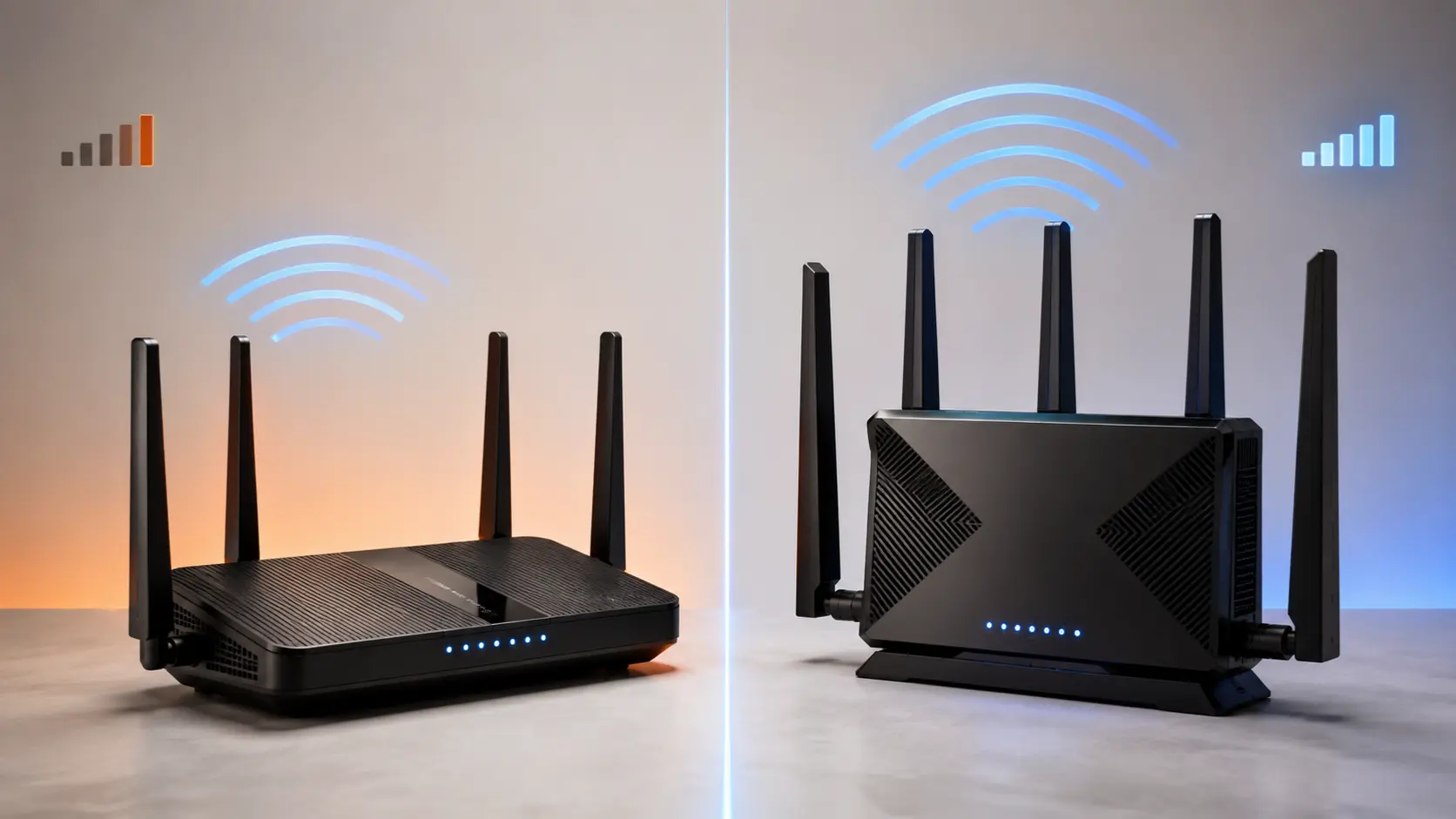
AC1200 or WiFi 6? Here's a plain-language comparison to help you pick the right Tenda router for your home, devices, and broadband plan.
Standing in front of a shelf of routers — or scrolling through options online — most people get stuck on the same question: is WiFi 6 actually worth paying more for, or is that just marketing? It's a fair question, and the honest answer is: it depends less on the technology itself and more on what's actually happening inside your home.
Here's a plain-language breakdown of AC1200 vs WiFi 6, using Tenda's own AC10 (AC1200) and RX2 Pro (WiFi 6) as real reference points, so you can match the router to your household instead of just the spec sheet.
The Core Difference, Without the Jargon
AC1200 refers to WiFi 5 (802.11ac) technology with a combined speed of up to 1200 Mbps across both bands (867 Mbps on 5 GHz + 300 Mbps on 2.4 GHz). It's been the standard, reliable choice for Indian homes for years.
WiFi 6 (802.11ax) is the newer standard. On a router like the Tenda RX2 Pro, it delivers up to 1501 Mbps combined — but the headline speed number isn't actually the main upgrade. The real difference is efficiency: how well the router handles many devices talking to it at the same time.
Think of it like a road junction. AC1200 is a well-built traffic signal — cars (devices) take turns, one at a time, and it works fine as long as traffic isn't too heavy. WiFi 6 is more like a modern roundabout with smart signals — multiple cars move simultaneously without stopping and waiting for their turn. As more "cars" (smart TVs, phones, IoT devices) join your home network, that difference becomes very noticeable.
Side-by-Side: Tenda AC10 vs Tenda RX2 Pro
| Tenda AC10 (AC1200) | Tenda RX2 Pro (WiFi 6) | |
|---|---|---|
| WiFi Standard | WiFi 5 (802.11ac) | WiFi 6 (802.11ax) |
| Combined Speed | Up to 1200 Mbps | Up to 1501 Mbps |
| Ports | Gigabit LAN/WAN | Gigabit LAN/WAN |
| Antennas | External antennas | 5 x 6dBi high-gain antennas |
| Multi-device handling | Good — comfortable up to 12–15 devices | Excellent — efficient well past 20 devices |
| Security | WPA2 | WPA3 |
| Best for | Standard 2–3 BHK homes, moderate device count | Device-heavy homes, smart homes, gaming |
| Typical use case | Everyday browsing, streaming, work-from-home | Smart homes, multiple simultaneous streams, many IoT devices |
When AC1200 (Tenda AC10) Is the Right Choice
- Your home has a typical device count — a few phones, a laptop or two, one smart TV
- Your broadband plan is in the 100–300 Mbps range
- You want reliable performance without paying for capacity you won't use
- You're setting up a first home network or replacing a very old single-band router
The AC10 remains an excellent, cost-effective choice — WiFi 5 isn't obsolete, and for a household that isn't overloaded with connected devices, it delivers everything you actually need day to day.
When WiFi 6 (Tenda RX2 Pro) Is the Right Choice
- Your home has 10 or more connected devices at once — think multiple people, each with 2-3 devices, plus smart TVs, cameras, smart plugs, and voice assistants
- You stream, video call, and game simultaneously across different rooms
- Your broadband plan is 300 Mbps or higher, and you want your WiFi to actually keep pace with it
- You want the current WPA3 security standard, not the older WPA2
- You're buying now and want a router that stays relevant for the next several years
Here's the thing most people don't realise: the jump to WiFi 6 matters far more in a busy, device-heavy home than it does in raw top speed. A single laptop streaming Netflix won't feel much different on AC1200 versus WiFi 6. A household where five people are on video calls, two are streaming 4K, and a dozen smart devices are pinging the network in the background — that's where WiFi 6's efficiency genuinely shows up as fewer buffering moments and less lag.
What About Price?
WiFi 6 routers like the RX2 Pro typically cost more than AC1200 models like the AC10 — that's expected, since you're getting newer chipsets and more antennas. The real question isn't "which is cheaper" but "which is wasted spend for my situation." Buying WiFi 6 for a single-person apartment with three devices is paying for capacity that will sit unused. Buying AC1200 for a five-person smart home with 20+ devices means you'll likely notice slowdowns as your device count grows, and end up upgrading sooner than you'd like.
A Simple Way to Decide
Ask yourself one question: how many devices are typically connected to your home WiFi at once?
- Under 10 devices, standard usage → AC1200 (Tenda AC10) is the smarter buy
- 10+ devices, or a smart home with many IoT gadgets → WiFi 6 (Tenda RX2 Pro) pays off
If you're unsure, count right now — phones, laptops, smart TVs, cameras, smart speakers, plugs, and any device that connects to WiFi in your home. Most people are surprised at how quickly that number climbs past 10 once smart home devices are added in.
Frequently Asked Questions
Is WiFi 6 significantly faster than AC1200 for everyday use like streaming and browsing? For a single device doing everyday tasks, the difference is often barely noticeable — both handle streaming and browsing comfortably. The real advantage of WiFi 6 appears when many devices are active simultaneously, not in single-device top speed.
Can I use a WiFi 6 router with older devices that only support WiFi 5 or WiFi 4? Yes. WiFi 6 routers are backwards compatible with older WiFi standards. Your older devices will simply connect using the older protocol while newer devices take advantage of WiFi 6 features.
Is the Tenda AC10 still a good buy in 2026, or should everyone move to WiFi 6? The AC10 remains a solid choice for standard households with a moderate device count and a broadband plan up to around 300 Mbps. WiFi 6 is worth the extra cost specifically for device-heavy homes, not as a universal upgrade for everyone.
Does WiFi 6 improve WiFi range and coverage compared to AC1200? Range depends more on antenna count and gain than the WiFi standard itself. The RX2 Pro's five high-gain antennas do give it an edge in coverage over typical AC1200 routers, but this is an antenna design factor as much as a WiFi 6 one.
Do I need WiFi 6 if my broadband plan is only 100 Mbps? Not necessarily for speed reasons — a 100 Mbps plan doesn't require WiFi 6 to be fully utilised. However, if you have many connected devices despite a modest plan, WiFi 6's efficiency in handling simultaneous connections can still improve your day-to-day experience.
Whether you land on AC1200 or WiFi 6, the goal is the same: a router that matches how your home actually uses the internet, not just the biggest number on the box. Compare the Tenda AC10, RX2 Pro, and the full router range to find the right fit.