Tenda Outdoor CPE Compared: Which One Fits Your Distance?
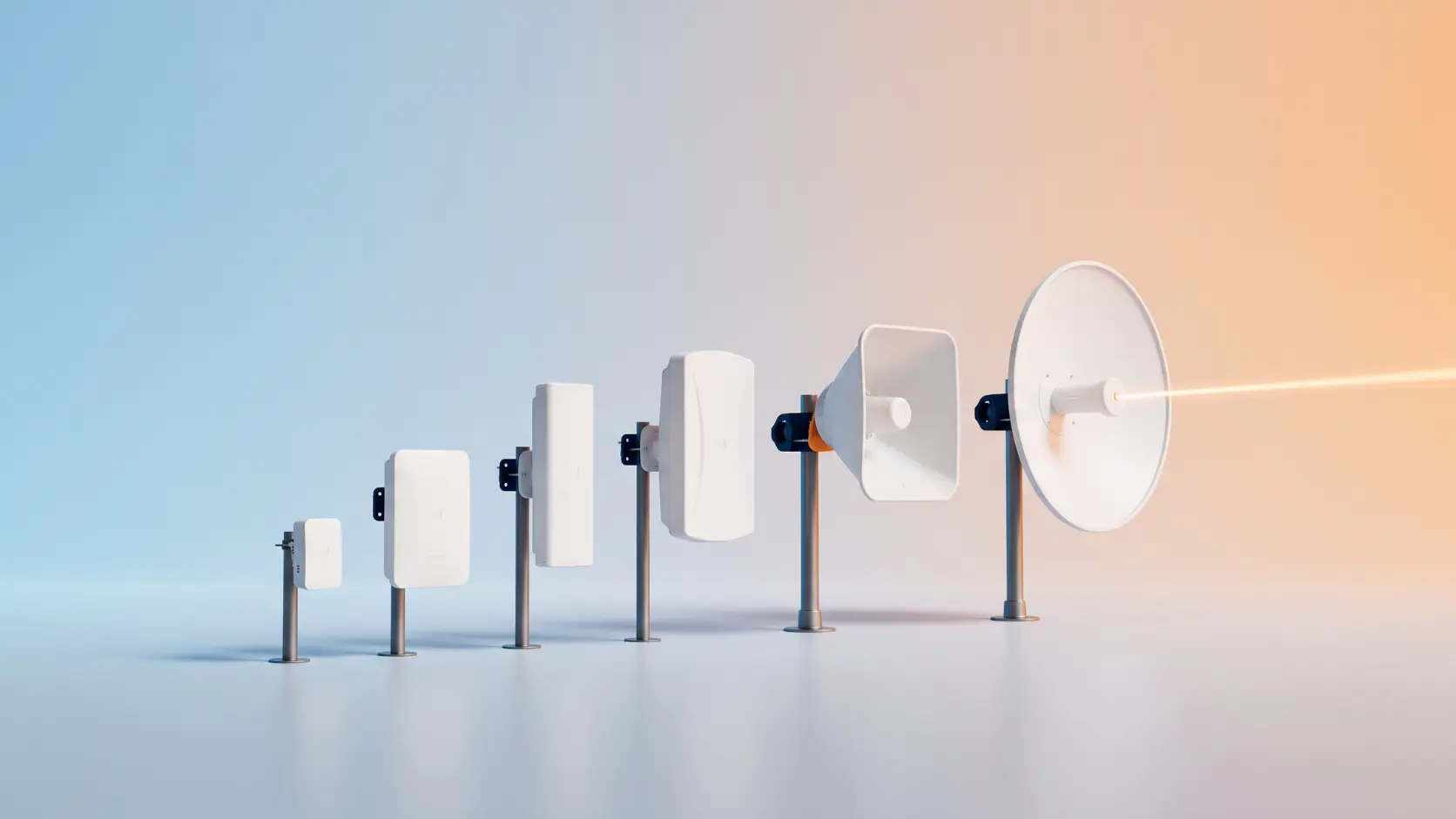
Which Tenda outdoor CPE fits your distance and bandwidth? Compare the O1, O1-5G, O3, OS3, O6, O8 and O9 side by side, with plain-language picks.
Seven outdoor CPE models, and at first glance they look like the same white box with a different number on it. They aren't. The differences come down to four things: how far the link has to go, how much data has to cross it, how crowded the airwaves are where you live, and how many devices you want to plug in at the far end.
This guide puts the whole Tenda outdoor CPE range side by side, then tells you which one to pick for the situation you're actually in. If you're not sure what a CPE does yet, read our explainer on outdoor CPEs first.
The Whole Range at a Glance
| Model | Band | Rated range | Antenna gain | Radio speed (rated) |
|---|---|---|---|---|
| O1 | 2.4GHz | 500m+ | 8dBi | up to 300Mbps* |
| O1-5G | 5GHz | 1km | 9dBi | 867Mbps |
| O3 | 2.4GHz | 5km+ | 12dBi | 150Mbps |
| OS3 | 5GHz | 5km+ | 12dBi | 867Mbps |
| O6 | 5GHz | 10km+ | 16dBi | 867Mbps |
| O8 | 5GHz | up to 20km | 23dBi | 433Mbps |
| O9 | 5GHz | up to 25km | 23dBi | 867Mbps |
*As listed by retailers; confirm on the product page. Ranges are rated figures under clear line of sight. Real-world range depends on your path, so always choose a model with headroom over your actual distance.
All of them are weatherproof outdoor units made for pole or wall mounting, and the larger models in the range list 6000V lightning protection.
Reading the Numbers Without Getting Fooled
Range is the maximum under good conditions, not a promise. A link that only just fits inside the rated distance will be fragile. One that sits well inside it will be steady.
Antenna gain (dBi) is how tightly the antenna focuses its signal. A higher number means more reach, but also a narrower beam. The O6, for example, has a beamwidth of about 30° in both directions, so it has to be aimed accurately. The O3 has a wider 60° horizontal beam, which is a little more forgiving on a short hop.
Radio speed is a theoretical ceiling. Tenda quotes the O6's real point-to-point throughput at up to 450Mbps and more, even though the radio is rated at 867Mbps. That's normal across the industry. Plan around what the link will realistically carry, which is a good deal less than the number on the box.
Ethernet ports set the limit on the wired side. The O6 and O9 have Gigabit ports. The O3 has two Fast Ethernet ports, and the OS3 has four. For a link carrying a handful of CCTV cameras, Fast Ethernet is more than enough.
2.4GHz or 5GHz?
Only the O1 and O3 use 2.4GHz. Everything else is 5GHz.
2.4GHz copes slightly better with light foliage and obstacles, which can help in rural settings with a lot of trees. The catch is that it's the most crowded band, shared with home routers, neighbours' WiFi and plenty of other gadgets. In a town or a busy industrial area, interference can drag a 2.4GHz link down.
5GHz is faster and usually much cleaner, so it's the better default for most links, particularly in built-up areas. It likes a clear path a little more.
A fair rule of thumb: choose 5GHz unless you have a specific reason not to.
Model by Model
O1 (2.4GHz, 500m+). The entry-level option for short hops: a garden office, a shed, a gate camera a few hundred metres away. It's simple and inexpensive, and 2.4GHz suits a rural spot with little interference.
O1-5G (5GHz, 1km). The same idea on the cleaner 5GHz band, with a bit more antenna gain (9dBi) and a 867Mbps radio rating. For most short links in towns or built-up areas, it's the better pick over the O1.
O3 (2.4GHz, 5km+). The 2.4GHz long-hop option, with a 12dBi antenna, two Fast Ethernet ports and support for AP, station, WISP and point-to-multipoint modes. Its 150Mbps radio rate is modest, which suits a couple of cameras or basic internet sharing but not heavy traffic.
OS3 (5GHz, 5km+). The practical all-rounder. A 12dBi antenna, 867Mbps rating and four Fast Ethernet LAN ports, so you can plug several wired devices straight into the far-end unit. For a typical factory, farm or campus link in the 500m to 3km range, this is usually the one.
O6 (5GHz, 10km+). The step up for longer or more demanding links. A 16dBi dual-polarised antenna, a Gigabit port, and Tenda's TD-MAX protocol for better performance when several remote units connect to one hub. It also works with Tenda's CPE Assistant software for managing several units from one PC. Choose it when the distance is several kilometres, or when you want more margin on a mid-range link.
O8 (5GHz, up to 20km). A 23dBi antenna built for reach. It's rated at 433Mbps with a single Ethernet port, so it's best where distance is the problem and bandwidth needs are moderate, such as a few cameras or a small remote site on a long hop.
O9 (5GHz, up to 25km). The long-range flagship: 23dBi, an 867Mbps rating and a Gigabit port. Choose it when the link is long and you also need serious bandwidth. It's overkill for anything under a few kilometres.
Quick Picks by Situation
| Your situation | Sensible choice |
|---|---|
| Gate or garden camera, a few hundred metres, rural | O1 |
| Same short hop, but in a town with lots of WiFi around | O1-5G |
| Farm, factory or campus link, 500m to a few km, mixed internet and cameras | OS3 |
| Long hop of a few km in a tree-heavy rural area, light traffic | O3 |
| Link of 5 to 10km, or a shorter link where you want margin | O6 |
| Very long link with modest traffic (a few cameras) | O8 |
| Very long link with heavy traffic | O9 |
Three Mistakes to Avoid
Buying for the maximum distance. Don't pick the O9 for a 300-metre link. More gain means a narrower beam and fussier alignment, so you can end up with a harder install and no real benefit.
Cutting it too fine. The opposite mistake is a model only just rated for your distance. If the path has any trees, buildings or weather in it, you'll feel it. Leave headroom.
Forgetting you need two. A link needs a unit at each end. Some models are sold as single units and some as pairs, so check the pack before you order.
Setup and Power Basics
Most of these units are powered with the included injector over the Ethernet cable. Many use passive PoE, which isn't the same as the standard PoE your PoE switch delivers, so check your specific model and hardware version before plugging a CPE into a PoE switch port. (Newer hardware revisions of some models list standard PoE support, so the box and manual are the final word.) Our PoE standards guide explains the difference.
For the full installation walk-through, from checking the path to aligning the antennas, see our guide to connecting two buildings without cabling. If you need to link one hub to several remote sites, read point-to-point vs point-to-multipoint.
Frequently Asked Questions
What's the difference between the O3 and the OS3?
Both are rated for 5km+ with a 12dBi antenna. The O3 uses the 2.4GHz band at 150Mbps, while the OS3 uses 5GHz at 867Mbps and has four LAN ports. For most links the OS3 is the stronger choice; the O3 makes sense where 2.4GHz suits the terrain.
Which Tenda outdoor CPE is best for CCTV cameras?
For a few cameras on a link under a couple of kilometres, the OS3 is a solid default. For longer links, step up to the O6. For very long hops with a small number of cameras, the O8 works. Add up your cameras' bitrates first and keep the total well within what the link will realistically carry.
Is a longer-range model always better?
No. Higher-gain antennas have narrower beams and need more careful alignment. Pick the model that comfortably covers your distance, not the one with the biggest number.
Can I mix different models at each end of a link?
It's safest to use matching units at both ends, which is also how most models are sold. If you want to mix models, check the compatibility notes for those specific units first.
Do these work for internet sharing as well as CCTV?
Yes. The same link can carry general internet traffic and camera feeds, as long as the combined demand stays comfortably within what the link delivers.
How do I check which model fits my exact distance?
Measure the straight-line distance on a map, confirm you have a clear path between the two mounting points, and choose a model rated comfortably above that distance. If you're unsure, our sales team can help you match a model to your site.
The right outdoor CPE is the one that covers your distance with room to spare, at the speed your devices actually need. Explore the full Tenda outdoor CPE range to find your match.